
Housing market: Community associations will continue to thrive in 2026
Reprinted with permission from HOAresources, the site powered by CAI with information and tools for condominium and homeowners association leaders. hoaresources.caionline.org
by | Jan 12, 2026 | CAI, Community Associations
 Community associations remain the preferred housing choice for millions of Americans, according to 2026 predictions. The housing market is expected to build on the gradual stabilization that began in 2025 and see improvements in inventory, home sales, prices, and mortgage rates.
In 2026, the Foundation for Community Association Research projects 3,000 to 4,000 new condominium communities and homeowners associations will be built, growing the total number of associations in the U.S. from approximately 373,000 at the end of 2025 to as many as 377,000 in 2026. Community associations, which include homeowners associations, condominiums, and housing cooperatives, now represent one-third of the U.S. housing stock.
The Foundation’s U.S. National and State Statistical Review estimates nearly 80 million Americans call community associations home.
The HOA model continues to play a central role in accommodating new residential growth. Developers, planners, and local governments increasingly rely on planned communities, condominium associations, and cooperatives to deliver housing while supporting infrastructure and service needs.
“After several years of market disruption, housing conditions are moving toward a more stable and predictable environment,” says Jake Gold, CAE, executive director of the Foundation. “Community associations continue to demonstrate resilience through economic cycles, offering a housing option that balances affordability, shared services, and long-term community investment.”
Dawn M. Bauman, CAE, chief executive officer at Community Associations Institute, says the data shows that community associations living remains a practical and attractive option for millions of homeowners, offering stability, shared responsibility, and a structure that supports sustainable growth. “Community associations continue to provide a durable housing framework at a time when communities are navigating affordability pressures, infrastructure demands, and long-term planning challenges,” she adds.
Several trends are likely to shape the 2026 housing market, according to the Foundation:
- Rising inventory levels. Most economic and housing analysts expect housing inventory to increase in 2026, supported by steady new construction activity and more homeowners listing properties as mortgage-rate pressures ease.
- Continued recovery in home sales. Sales activity is expected to strengthen following the improvements seen in 2025, as affordability gradually improves and buyers return to the market.
- Modest price appreciation. Home prices are projected to grow 2–3% nationwide, reflecting a more balanced market and slower inflation in the housing sector.
- More predictable mortgage rates. Mortgage rates are expected to continue stabilizing, with some forecasts projecting a shift toward the mid-5% range by late 2026.
- Sustained construction activity. New housing construction is expected to remain close to long-term historical norms. While it won’t fully resolve the national supply shortage, continued building will help ease inventory pressures, especially in high-growth regions.
Data from the 2024 Homeowner Satisfaction Survey, conducted by Zogby Analytics for the Foundation, highlights homeowners’ positive experiences in homeowners associations, condominiums, and housing cooperatives:
- Overall experience. Eighty-six percent rate their experience as very good or good (60%) or neutral (26%).
- Governance. Eighty-two percent believe their elected governing board serves the community’s best interests.
- Management support. Seventy-two percent say their community manager provides valuable support.
- Property value protection. Eighty-seven percent say their association’s rules protect or enhance property values.
Preventive maintenance: 6 steps to secure a safe future for your community
Reprinted with permission from HOAresources, the site powered by CAI with information and tools for condominium and homeowners association leaders. hoaresources.caionline.org
Contributed by Kevin Davis, CIRMS; Susan McClintic, Esq.; and J. David Rauch
 The collapse of Champlain Towers South in Florida in 2021 wasn’t just a tragic event, it was a wake-up call for community associations and maintenance plans and programs. Since then, insurers have gotten stricter, lenders more cautious, and lawmakers busier than ever. With a little discipline and a plan, you can secure a safe future for your community.
In today’s environment, maintenance isn’t optional. It’s the foundation that supports your property values, protects the safety of homeowners, and keeps your community insurable and solvent. Insurance premiums are up 20% nationwide over the past year. In high-risk fire zones like parts of California, they’ve jumped over 500%.
Ignoring maintenance may make it harder to get financing. Fannie Mae and Freddie Mac have created a blacklist of communities they identify as having deferred maintenance issues. If your community is on it, buyers can’t get conventional mortgages, and property values spiral down.
States also are tightening regulations. Fewer insurers are writing policies. The market’s shrinking, and what’s left costs more and covers less.
Preventive maintenance is about catching small problems before they become an expensive crisis. It’s not just about saving money. It’s about building a stable, thriving community. Here’s how to start:
- Understand your real job. Boards often think their role is to keep assessments low, but the real mission is bigger: Maintain, protect, enhance the community, and increase home values.
- Build a maintenance plan. Your community needs a basic plan listing major components such as roofs, plumbing, siding, and decks. The plan also should include how often these components should be inspected and serviced. Develop a full maintenance manual that documents tasks, schedules, and best practices for all components.
- Budget for inspections and routine maintenance in your operating budget.
- Fund reserves and adhere to your reserve study.
- Work with quality service providers.
- Choose an insurance broker. Your insurance broker is a strategic partner in reducing risk. Bring your community insurance and risk specialist into the conversation early. Share your maintenance plan and inspection records. Schedule loss control inspections to catch issues before they catch you. Focus on reducing water damage, preventing roof failures, and mitigating electrical and HVAC fire risks.
Big special assessments cause panic, distrust, board recall, and turnover. Instead, focus on steady, sustainable growth through small, regular annual assessment increases. Cutting maintenance in tough times might seem like a quick win, but it makes the situation worse.
Updating your documents can clarify maintenance responsibilities, strengthen reserve funding requirements, improve transparency for homeowners, and make your community more attractive to lenders and insurers.
Maintenance is essential to prolonging building component lives, money, and even human life. Communities that take these steps will break free of legal, lending, and insurance constraints.
Kevin Davis is with Kevin Davis Insurance Services in Los Angeles. Susan McClintic, a fellow in CAI’s College of Community Association Lawyers, is with Epsten in San Diego. David Rauch is with ProTec Building Services in San Diego.
What’s With The Insurance Industry?
 The Champlain Towers South condominium in Surfside, Florida, partially collapsed on June 24, 2021, at approximately 1:30 a.m. EDT. The collapse resulted in the deaths of 98 people, according to the National Institute of Standards and Technology (NIST).
This triggered the start in the rise of insurance premiums in homeowners associations as well as all other insurance. On top on that, wildfires in California and hurricanes in Florida did not help curb the costs.
In the past few years, the insurance industry has faced a significant increase in billion-dollar claims, primarily driven by natural catastrophes. Specifically, in the US, there were 115 billion-dollar weather and climate disasters between 2020 and 2024, resulting in 2,520 deaths, according to the NOAA National Centers for Environmental Information (NCEI). In 2024 alone, there were 27 such disasters, causing 568 deaths, according to the NOAA National Centers for Environmental Information (NCEI).
Global insured losses from natural disasters reached at least $100 billion in the first half of 2025, making it the second-highest total on record, according to Risk & Insurance.
The US has been heavily impacted, with numerous billion-dollar weather and climate disasters. In 2024, 27 such disasters resulted in 568 deaths, according to the NOAA National Centers for Environmental Information (NCEI).
Hurricanes, severe thunderstorms, and floods have been major drivers of these losses. For example, Hurricane Ian in 2022 caused $54 billion in insured losses, according to www.iii.org
Insured losses from natural catastrophes are trending towards $145 billion in 2025, and there’s a 1-in-10 probability that losses could exceed $300 billion in a “peak loss” year, according to Swiss Re.
The increasing frequency and severity of these events are leading to higher payouts, increased reinsurance costs, and challenges in obtaining insurance coverage, particularly in vulnerable areas, according to The Zebra.
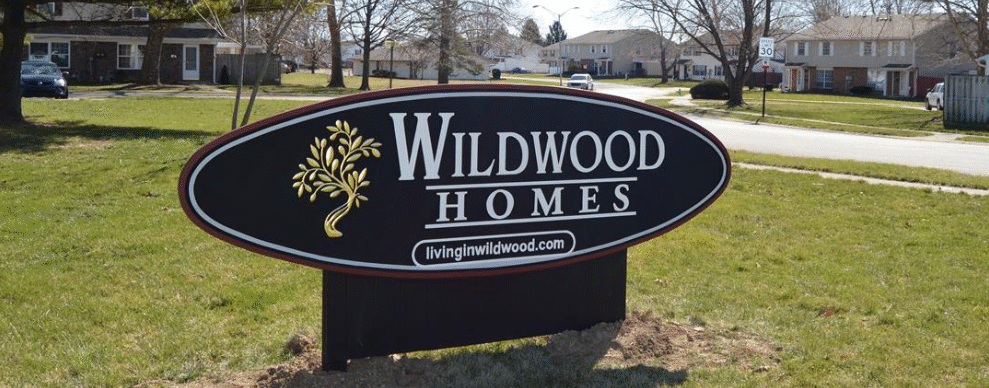
Wildwood insurance costs have risen from around $17,000 a year in the late 1990’s, to over $70,000 a year today. This year our insurance cost went up about $14,000 a year. This is equivalent to $7.48 a month in dues.
From 2015 to 2021 our monthly dues went up only $5. From 2022 to 2025 our monthly dues went up $31.50 due mostly to insurance cost and building maintenance (our buildings are over 50 years old).
The Board of Directors work hard to keep costs down as low as possible. Unfortunately, there are costs that we cannot control.
Here is what Jim Ruebsam from The Daniel & Henry Company says about The New Realities of Community Association Insurance Underwriting
What is a Reserve Fund
 Most homeowners associations have what is called a reserve fund. It is a fund where money is put away to cover major capital expenses.
Google AI explains it as follows;
An HOA reserve fund is a dedicated savings account that an Homeowners Association (HOA) establishes to cover major, non-recurring expenses like roof replacements, repaving, or pool repairs. It’s essentially a long-term savings plan to avoid special assessments or significant dues increases when these large-scale projects arise.
So, how do you know how much to put in your reserve fund? The homeowners association gets what is called a reserve study. There are many reserve study companies out there. You hire one, they gather all the information as to what the homeowners association is responsible for, give each item a lifespan, determine what it would cost to replace each item, and then tell you how much you need in your reserve fund. This prevents not having the money when capital items need to be replaced.
Generally, homeowners associations have two bank accounts. One is the operating account, used for day to day expenses. The second one is the reserve fund account. Normally, capital expense items are not paid for out of the operating account.
This prevents special assessments, and huge monthly dues raising.
Here is what Community Associations Institute says about reserve funds;
https://www.caionline.org/advocacy/public-policies/reserve-study-and-funding/
Indianapolis Ordinances For Dogs and Cats

Sec. 531-203. – Dog and cat curbing requirements.
(a)
No person knowingly shall allow a dog or cat which is kept by that person to defecate or urinate on a public street, byway, municipally owned or public land or building, or upon private property, in the city without the prior permission of the owner of such property; however, if an animal defecates on property described in this subsection, the animal’s owner or keeper promptly shall remove any feces to a waste container, or otherwise dispose of such material in a manner inoffensive to reasonable public sensibilities.
(b)
Notwithstanding the provisions of subsection (a) of this section, the owner of a dog serving a vision-impaired person in an auxiliary ocular capacity or in any capacity to assist such person with a physical impairment may permit such dog to relieve itself on ground situated outside of pedestrian or vehicular traffic ways, and is relieved of the requirement to remove any feces to the extent such requirement is impractical for a person of such impairment.
(c)
No person knowingly shall allow his or her dog or cat to disperse waste material placed for public or private collection upon any public street, or byway or right-of-way, or any municipally owned or public land or building, or upon private property.
(d)
A person who violates any provision of this section shall be punishable as provided in section 103-3 of this Code; provided, however, a fine imposed for any such violation shall not be less than twenty-five dollars ($25.00).
Sec. 531-102. – Animals at large prohibited; penalties.
(a)
An owner or keeper of an animal commits a violation of the Code if that animal is at large in the city.
(b)
Except as provided in subsection (c) of this section, section 531-501 or section 531-727, the first violation in any twelve-month period shall be subject to an admission of violation and payment of the designated civil penalty through the ordinance violations bureau in accordance with Chapter 103 of the Code. All subsequent violations in a twelve-month period are subject to the enforcement procedures provided in section 103-3 of the Code and a fine of not less than one hundred dollars ($100.00) per violation.
(c)
If, while the animal is at large in violation of this section it:
(1)
Attacks another animal; or
(2)
Chases or approaches a person in a menacing fashion or apparent attitude of attack;
then the violation shall be subject to the enforcement procedures and penalties provided in section 103-3 of the Code, and the fine imposed shall not be less than two hundred and fifty dollars ($250.00), or five hundred dollars ($500.00) if another animal or person is injured as a result of the animal’s actions. If the violation results in serious injury to any person, the court upon request shall order the animal forfeited and/or destroyed.
The cities defination of at large follows: “At large means being loose and free roaming, not being on a leash and under the control of a competent person, or any portion of the animal’s body not being confined within a pen, corral, yard, cage, house, vehicle, or other secure enclosure or structure or by other means that prevents escape.”